

Climate Resilience & Poverty Reduction Initiative:
immigrant & refugee women
Over the last four decades, the number of women migrants to Canada increased significantly. They arrived as members of the family class, economic immigrants, migrant workers, and international students.
Unemployment and Underemployment Experienced by Immigrant Women
- Female immigrants may take longer than their male partners to find work, according to the 2011 National Household Survey.
- Immigrant women are less likely than men to be working full-time, and they are less likely to be eligible for unemployment benefits if needed.
- Immigrant women are least likely to be employed in positions that match their education.
- Women are employed in lower-paying occupations and experience more discrimination in the workplace than men.
- Finding employment is a major stressor for many immigrant women, particularly racialized immigrant women. This vulnerable group faces intersecting issues involving gender, race, and class that make them experience oppression concerning financial insecurity, racist and xenophobic attitudes, and social exclusion.
Obstacles in Finding Employment
- To enter the workforce, immigrant women consider many factors, including family responsibilities, the ability to converse in English and other settlement issues.
- Immigrant women, especially single mothers, face challenges in juggling work and home responsibilities. This barrier prevents them from finding a job.
- Some immigrant women have a post-secondary education and have had years of professional work expertise in their home countries before immigration. However, their credentials and experiences are not being recognized.
Poverty Experienced by Immigrant Women
- Very recent immigrant women (11.6%) were more likely to experience poverty in 2021 than women born in Canada (7.0%)
- Social and economic injustice causes poverty experienced by immigrant women.
- A gender wage gap persists in Canada, showing that women earned 84 cents for every dollar earned by men for their median hourly wages in 2022.
- Single mothers particularly experience a high risk of entering poverty because of the lack of affordable childcare services and women’s generally lower wages.
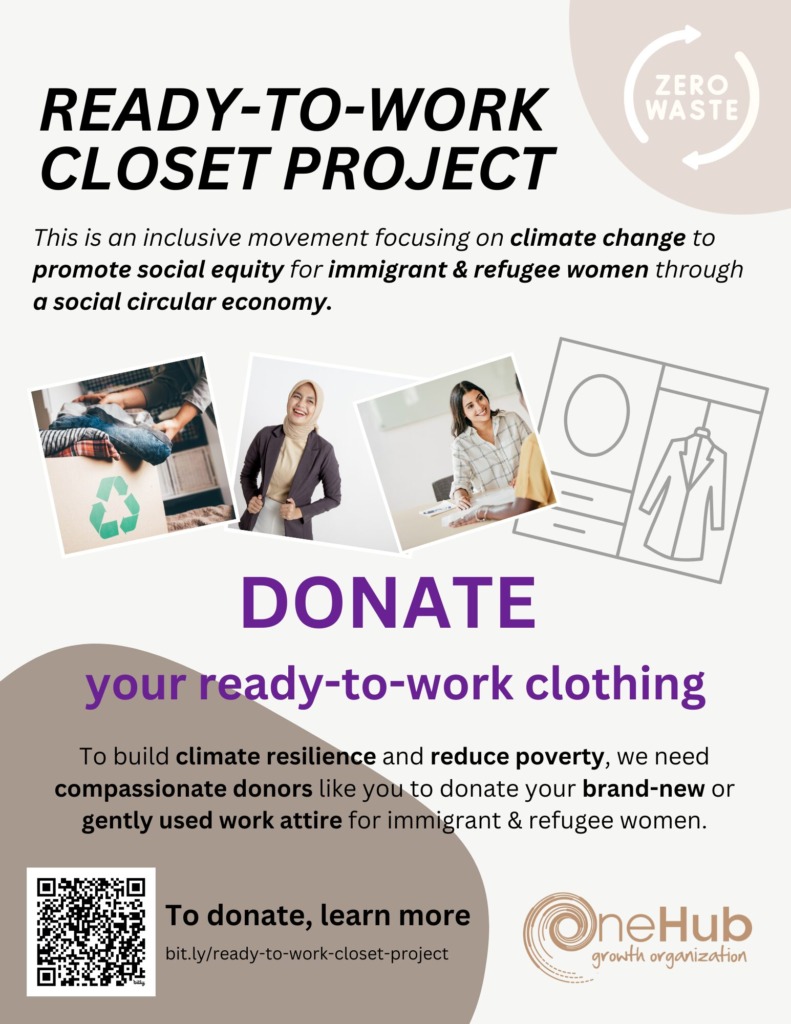
Donate your ready-to-work clothing
Working with Donors
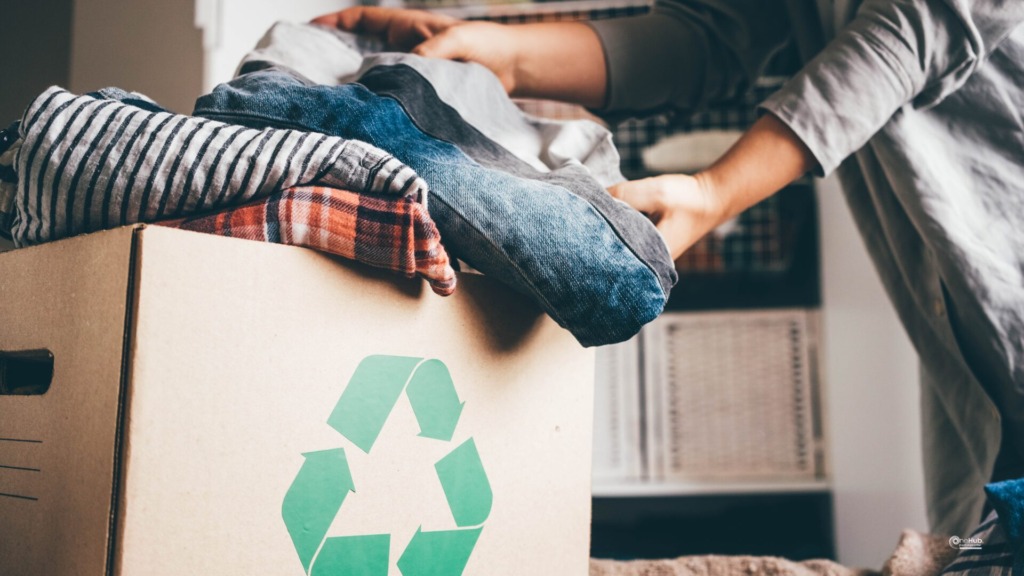
- Donate your brand-new or gently used work attire for women, including blouses, jackets, cardigans, blazers, suits, scarfs, belts, pants, dresses, skirts, shoes, handbags, and outer jackets.
- Clean all classic clothing items before donations.
- Fill out the online form by selecting the date/time for an appointment to drop off your clothing items.
Our Ready-to-Work Closet Project
Program Objectives
- Build climate resilience by using a social equity lens
- Increase sensitivity and awareness of climate change among immigrant & refugee women, as well as donors
- Reduce poverty experienced by immigrant women job seekers through an inclusive movement.
- Promote opportunities and foster possibilities for immigrant women job seekers through the idea of a clothing bank.
- Cultivate a sense of security and generate hope for immigrant women who are living in low-income households.
- Help immigrant women overcome unemployment and persistent barriers that prevent them from functioning well in interviews as well as the labour market.

Program Model
- Creating a safe, inclusive environment for donors and immigrant women
- Working with donors who donate their brand-new or gently used work attire for women
- Working with immigrant women who are living in low-income households and actively looking for job and interviewing opportunities
As Program Outcomes, Immigrant and Refugee Women Job Seekers will:
- Increase their awareness of climate change and its impact on their lives
- Increase their capacities to withstand life stressors, thrive, and make changes that will allow them to move forward in life.
- Be able to prepare for interviewing opportunities and increase their confidence during the interviewing process.
- Gain opportunities to develop a career and various skill sets.
- Feel empowered to challenge oppression based on their gender, race, and immigration status.
- Develop solidarity among women.
- Feel welcomed and supported through this program.

Working with Eligible Immigrant Women
Coming Soon. This program will be open once we receive sufficient donations.
- You are above 18 and are eligible to work in Canada.
- You are living in a low-income household and actively looking for work.
- Fill out the online form by selecting the date/time for an appointment to select one (1) free ready-to-work clothing item for your job interview or new work environment.
- You are able to access this program two (2) times within a 12-month timeframe.
- You will be connected with career development and skills development programs.
Work Cited:
Cheung, M., & King, R. U. (2017). Working with immigrant women and families. In M. C. Yan, & U. Anucha (Eds.), Working with immigrants and refugees: Issues, theories, and approaches for social work and human service practice ( pp. 181-199). Oxford University Press.
Raphael, D., Bryant, T., Mikkonen, J. and Raphael, A. (2020). Social Determinants of Health: The Canadian Facts. Oshawa: Ontario Tech University Faculty of Health Sciences and Toronto: York University School of Health Policy and Management
Statistics Canada. (2024). International Women’s Day 2024. https://www150.statcan.gc.ca/n1/pub/89-28-0001/2022001/article/00009-eng.htm